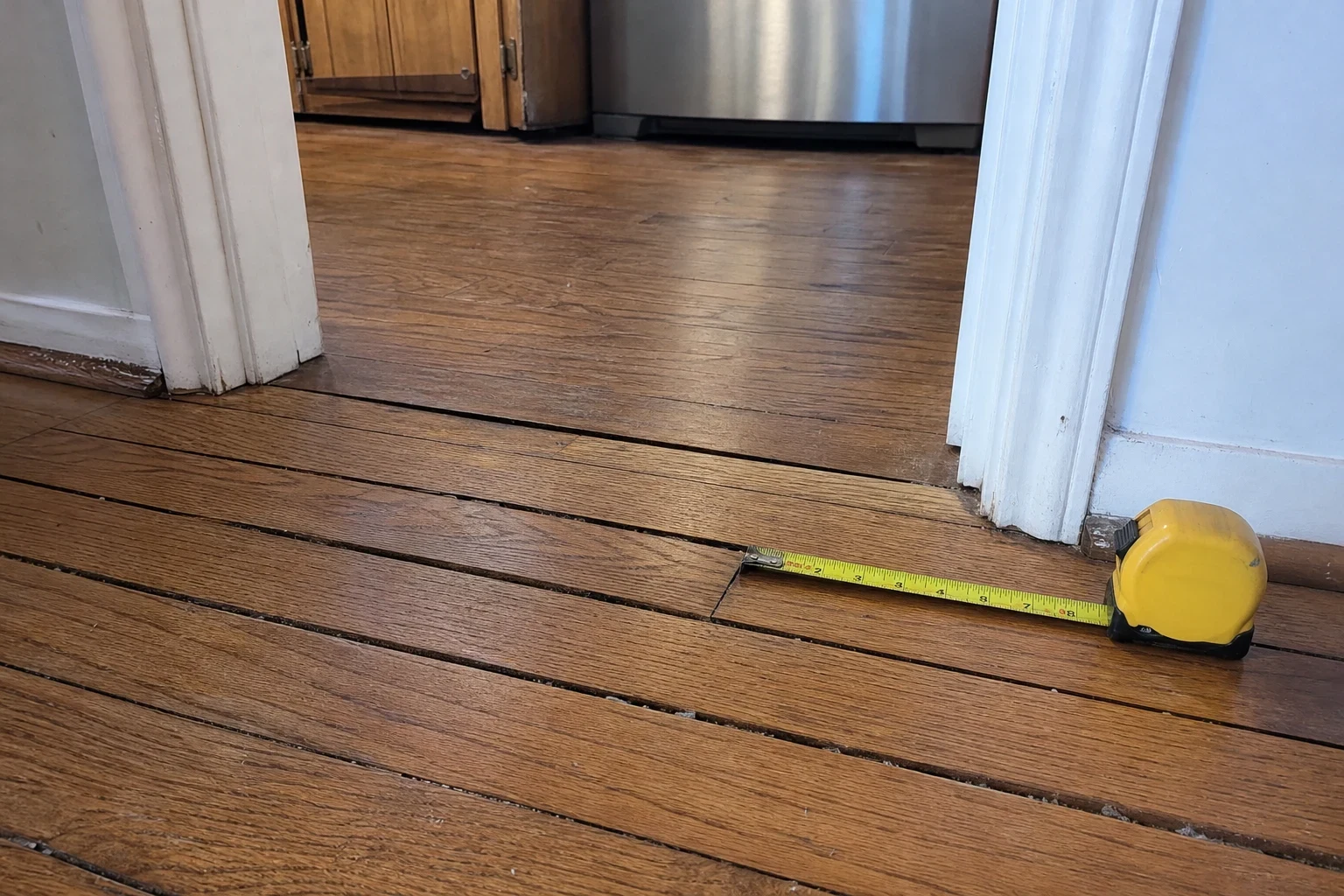
Why Do Hardwood Floors Separate in Baytown Homes?
A gap between boards is a clue, and reading it correctly decides whether you wait, adjust your home's humidity, repair a section or open an insurance claim.
Why do hardwood floors separate?
Hardwood floors separate because wood shrinks when it loses moisture. Seasonal drying, boards installed before they acclimated, a damp slab, or a leak that swelled the boards and then dried can all open gaps. Installation choices like too few fasteners or failing adhesive make it worse. The pattern of the gaps usually tells you which cause you have.
Is some seasonal gapping normal?
Yes. Wood takes on moisture from the air and gives it back, so solid boards swell slightly in humid months and shrink when the air dries out. In Baytown the long, damp summer keeps boards full, and the shift comes in winter when the heat runs and indoor air gets drier. Thin, even gaps that show up across the room in winter and close again by late spring are the floor behaving like wood.
Wider planks show this more than narrow strips, because each board has more width to shrink. A light-colored floor over a darker subfloor also makes ordinary gaps easier to see. If the gaps are uniform, roughly the width of a business card, and they come and go with the seasons, you usually do not need a repair.
What causes gaps that keep getting wider?
Gaps that stay open year round, grow over time or appear in one area instead of across the whole room point to something beyond the weather. These are the causes we find most often when we look at a separating floor in your home.
- Boards installed before they acclimated. Wood delivered and laid the same day can still be adjusting to the house, and it shrinks after it is down.
- Moisture from below. Most homes around Baytown sit on concrete slabs, and a slab that was not tested or sealed can feed moisture into the boards, which swell, crush at the edges, then gap when they dry.
- A leak that has since dried. Water from a dishwasher, refrigerator line, water heater or storm intrusion makes boards cup and swell. Once the area dries, the crushed edges leave permanent gaps.
- Fastening or adhesive failure. Too few nails, or glue that let go on a slab, lets boards drift apart under foot traffic, often showing as one or two wide gaps instead of many small ones.
- Heavy furniture on a floating floor. A kitchen island or loaded bookcase can pin a floating floor so it cannot move as a unit, and the seams open elsewhere.
How can you tell a moisture problem from an installation problem?
Look at where the gaps are and what the boards around them look like. Gaps near a sink, an exterior door, a bathroom or an appliance, especially with edges that are raised, darkened or slightly cupped, usually mean water was involved. Gaps spread evenly through a dry interior room point more toward acclimation or seasonal shrinkage.
A single wide gap, or a run of boards that have shifted together, often means fasteners or adhesive did not hold. Boards that sound hollow when you tap them or feel soft when you step near the gap suggest the bond to the subfloor has failed.
When we inspect a floor we check moisture readings in the boards and, where we can, the subfloor, and we photograph what we find so you can see the pattern yourself. That evidence matters for the repair, and it matters even more if an insurance claim is on the table.
Will homeowners insurance cover separated hardwood?
It depends on the cause, and your insurer makes that call, not your flooring company. Policies generally treat sudden water damage, like a burst supply line or storm water coming inside, differently from gradual wear, seasonal movement or installation problems. Ordinary seasonal gapping is usually not something a policy is written to cover.
If you suspect a leak caused the separation, document it before anything is moved or torn out. We can walk through the floor with you, take photos and moisture readings, and explain in plain terms what we see and what a repair would involve. We will not tell you what your claim is worth or promise an outcome, but clear records make the adjuster's visit more productive.
- Take wide photos of the room and close shots of the gaps, with a coin or tape measure for scale.
- Photograph the likely source, such as the water line, appliance or door threshold.
- Write down when you first noticed the gaps and any water event before that.
- Keep any receipts for plumbing repairs or drying equipment.
- Avoid pulling up boards until the adjuster has seen the floor or told you to proceed.
How are separated hardwood boards repaired?
The fix follows the cause. For seasonal gaps, the answer is usually steadier indoor humidity and patience, not new flooring. For a localized area damaged by water, we can often remove the affected boards and weave in matching replacements once the source is fixed and the subfloor is confirmed dry.
When gaps come from a failed installation or moisture coming up through a slab, a patch rarely holds. The better repair is to lift the floor, correct the subfloor and moisture barrier, let new material acclimate in your home, and reinstall with proper fastening or adhesive. In rooms that see regular water, some homeowners choose luxury vinyl plank for that area instead, since it does not swell the way wood does.
More questions about gaps in hardwood floors
- Should I fill the gaps with wood filler?
- We do not recommend it for seasonal gaps. When the boards swell back in humid months, filler tends to crack, crumble or push up out of the seams.
- Does engineered hardwood separate less than solid hardwood?
- Generally, yes. Its layered core resists expanding and shrinking, so it is often a better fit over concrete slabs, though it still needs a dry subfloor and correct installation.
- Can running a humidifier close the gaps?
- It can help in drier months by keeping indoor humidity more even. Check your flooring manufacturer's recommended humidity range and aim to stay within it year round.
- How long should new hardwood sit before installation?
- It depends on the product and the conditions in your home. We check moisture readings in the wood and the subfloor and install once they are within the manufacturer's guidelines, not on a fixed number of days.
Find out what your floor gaps are telling you
Call and describe what you are seeing. We will set a time to look at the floor, take moisture readings and photos, explain the likely cause, and walk you through repair options and what to document if insurance may be involved.