ServicesVinyl Composition Tile
Vinyl Composition Tile in Baytown
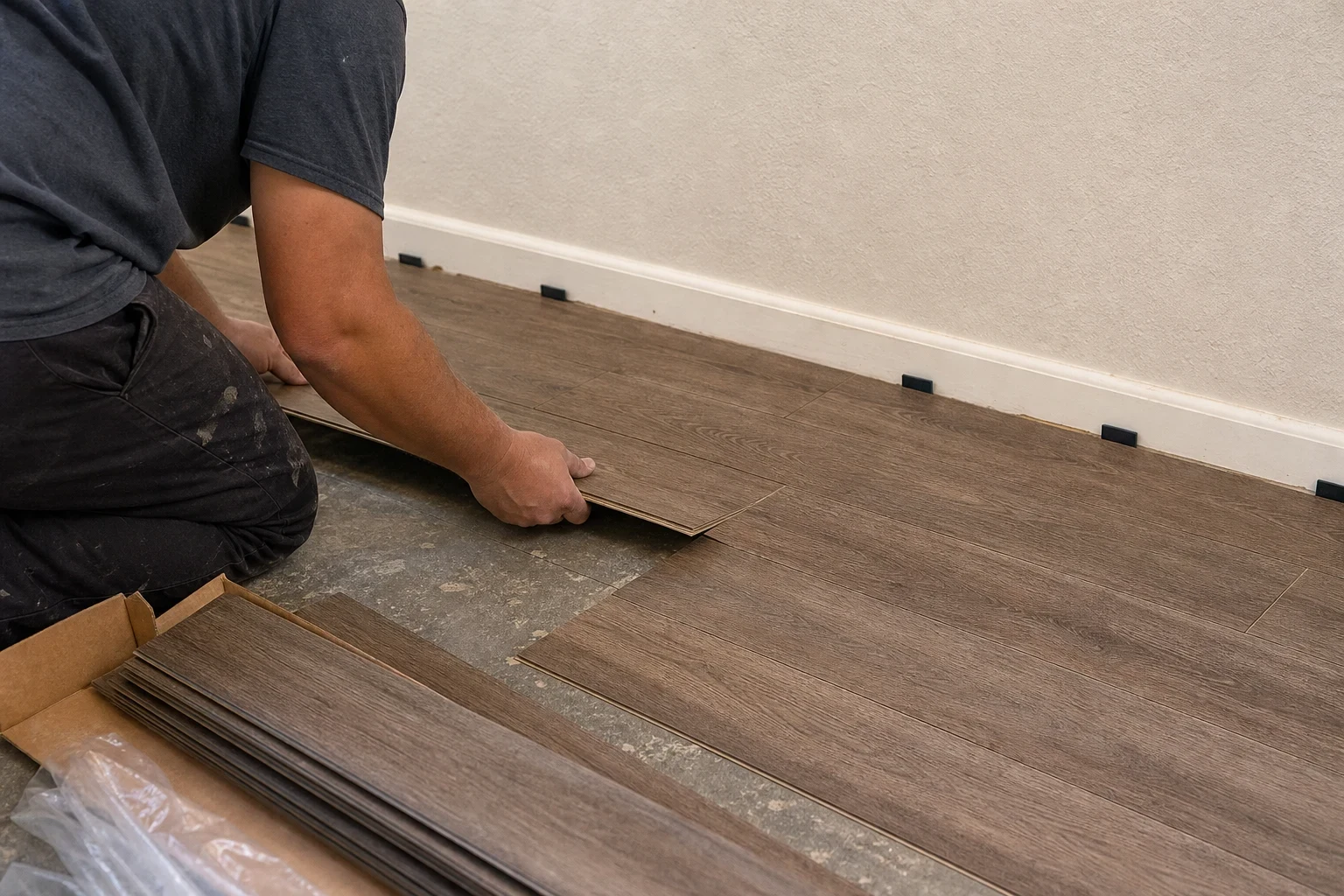
Vinyl composition tile is the dense 12-inch tile familiar from schools and shops, and at home it holds up well in utility spaces, entry rooms and workshops. We prepare the base properly, set each tile in fresh adhesive and record any water damage you may need for a claim.
When VCT Is the Right Floor
VCT is made mostly of limestone filler bound with vinyl resin, pressed into thin, dense tiles. It is not waterproof the way luxury vinyl tile is, and it is not meant to look like wood or stone. What it offers is a firm, durable surface that takes rolling carts, dropped tools and muddy boots, and individual tiles can be replaced without pulling up the room.
It suits utility rooms, garage conversions, workshops, pantries and retro kitchens where a checkerboard or solid field of color fits the space. If you want a softer, more water-tolerant floor for a living area, we will tell you plainly that Luxury Vinyl Tile or Luxury Vinyl Plank may serve you better.
Many calls start after a washer hose or water heater lets go. Water gets under the tiles, the adhesive releases and the floor begins to lift. We have been in business 25+ years, and we know a claim goes smoother when the damage is recorded before anything is torn out.
What Our VCT Work Includes
- Damage photos and measurements
- Before removal we photograph lifted, stained or cracked tiles and measure the affected area. You get those records to share with your insurer. We explain what an adjuster usually looks for, but the coverage decision stays with them.
- Moisture checks on the base
- VCT adhesive fails on a damp slab or wet plywood. We test the subfloor before we set a single tile and let it dry when it needs to.
- Removal and subfloor prep
- We take up damaged flooring, scrape old adhesive, patch low spots and grind high ones. VCT is thin, so every dip and trowel ridge underneath will show through if it is skipped.
- Layout and installation
- We snap center lines so borders come out even at the walls, spread adhesive at the right thickness and wait for it to tack. Each section is rolled with a heavy roller so the tiles bond fully.
- Trim, transitions and cleanup
- Wall base, thresholds and transitions to neighboring floors are fitted cleanly. We clear debris and leave you with a simple care routine for keeping the surface protected.
Signs Your VCT Needs Attention
Tiles popping loose
Tiles that click underfoot or lift at the corners usually mean the adhesive has let go, often from moisture below.
Black or sticky seams
Adhesive squeezing up between tiles points to a damp slab or a bond that never cured properly.
Staining after a leak
Yellow or brown discoloration that will not clean off often means water sat under the tile. Photograph it before anyone pulls it up.
Cracks and chipped edges
Cracked tiles let water and grit reach the base. A few can be swapped, but widespread cracking often signals movement or voids underneath.
Old 9-inch tiles
Square tiles measuring 9 by 9 inches in older homes may contain asbestos. Do not sand or break them. We will recommend testing by a qualified lab before any removal is planned.
What Shapes the Cost of VCT
VCT itself is one of the more affordable hard floors, so the price is usually driven by what happens underneath and around it. Your written estimate lists each item separately, which also helps when an insurer asks for a breakdown.
Room size and pattern
Square footage sets the baseline. Checkerboards, borders and multi-color layouts take more cutting and layout time than a single field color.
Removal of the old floor
Pulling up glued vinyl or tile and scraping adhesive adds labor. Suspect older tile that requires testing or specialist abatement is a separate step handled before we begin.
Subfloor condition
A flat, dry slab is quick to prepare. Cracks, high spots or water-soaked plywood need patching, grinding or replacement first.
Color matching
Replacing a few tiles is inexpensive when the color is still made. If it is discontinued, matching the room may mean retiling the whole space, which is worth raising with your adjuster.
From First Call to a Finished VCT Floor
- 1
Start with a phone call
Describe what happened and which rooms are affected. If you have already opened a claim, keep the claim number nearby so our notes line up with your insurer's file.
- 2
In-home visit
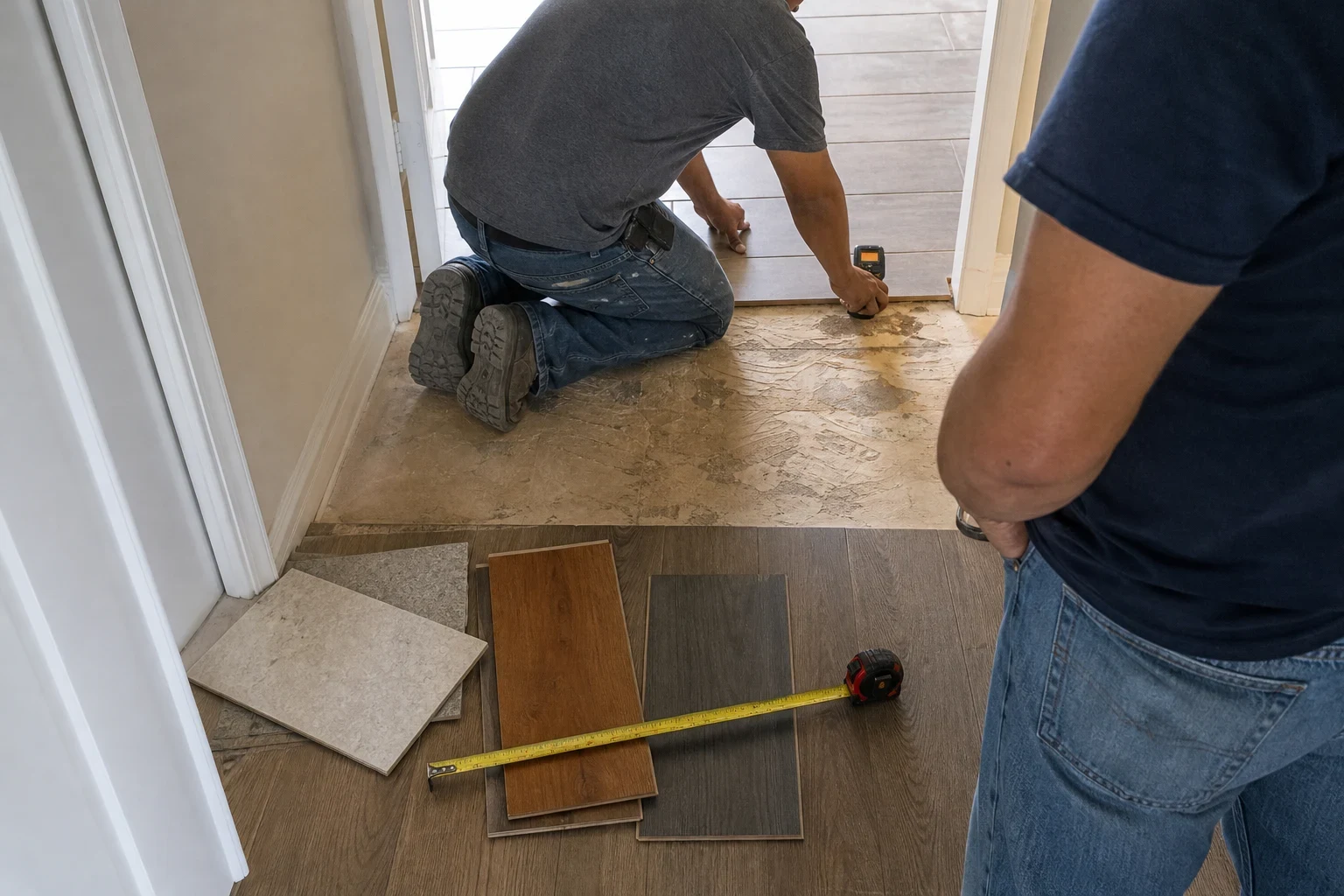
We measure, test the base for moisture, photograph the damage and talk through tile colors and patterns. You receive a written, line-item estimate.
- 3
Prep day
Furniture and appliances are moved, old flooring comes up and the subfloor is leveled. Doors and nearby floors are protected from dust.
- 4
Installation
Tiles go down in rolled sections, working from the center lines out toward the walls. Heavy appliances go back only after the adhesive has had time to set.
- 5
Walkthrough
We check seams and edges with you, answer care questions and hand over the finished-work photos for your records.
VCT Questions We Hear Often
Is vinyl composition tile the same as luxury vinyl tile?
No. VCT is a dense limestone-and-vinyl tile glued down and kept polished. Luxury vinyl tile is thicker, has a printed wear layer and handles water far better. We can show you both and help you decide which suits the room.
Will my insurance pay to replace my VCT after a leak?
That depends on your policy and the cause of the water, and only your insurer can decide. What we do is document the damage with photos, measurements and a line-item estimate so the adjuster has a clear picture. We will not promise coverage we cannot control.
Can you replace just the damaged tiles?
Often, yes. If the color is still available and the base underneath is dry and sound, we lift the damaged tiles and set new ones. If water spread under the surrounding area, a larger section usually needs to come up.
What happens if a tile lifts after you install it?
Every installation carries a 1-year workmanship warranty. If a tile we set comes loose because of our installation during that year, we come back and correct it. Our company is also insured, so you are protected while we work in your home.
When can we walk on the new floor?
Gentle walking is generally fine within a few hours of the final roll. Hold off on sliding heavy appliances back into place and on wet mopping until the adhesive has fully cured. We will give you the timing for your room before we leave.
Ready to Get Your Floor Back in Order
Tell us what happened and which rooms are affected. We will set up a visit, record the damage properly and walk you through a written estimate for new vinyl composition tile.