ServicesLuxury Vinyl Tile
Luxury Vinyl Tile Installation in Baytown
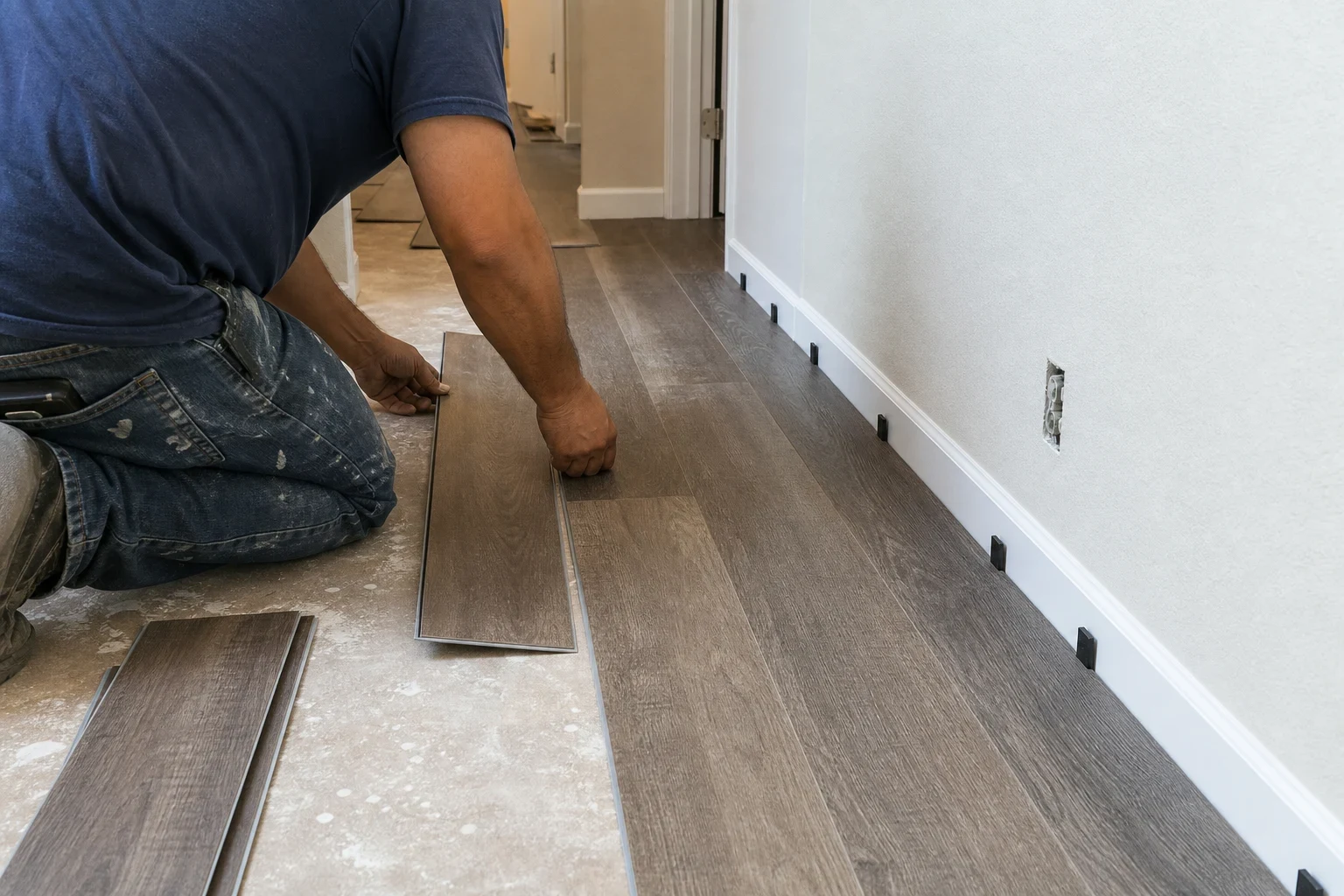
We install luxury vinyl tile with the look of stone or ceramic and a warmer, quieter feel underfoot. If water damage brought you here, we photograph and record what happened before anything is torn out, so your claim starts with clear evidence.
When luxury vinyl tile is the right floor
Luxury vinyl tile, or LVT, comes in square and rectangular formats that mimic slate, travertine, marble and porcelain. Some lines click together over a thin pad. Others glue straight to the slab. Many can be grouted, which gives the joints the shadow line of real tile without the weight, the cold surface or the cracked grout that follows a slab that moves.
It earns its place in the rooms that take water and hard use: the kitchen, a bathroom, the laundry and the front entry. Many people love the stone appearance there but not the chill or hardness of ceramic. The surface shrugs off spills, cleans with a damp mop and is far kinder to a dropped glass. For long wood-look boards, our Luxury Vinyl Plank page covers that format. Real ceramic and porcelain are on our Tile Flooring page.
We have been in business for more than 25 years. When a leak or storm is behind the project, we help you document the damage carefully. We do not decide your coverage; the adjuster does. Our part is to show and tell you plainly what we found.
What our LVT installation includes
Moisture testing on the slab
Concrete under a floor can stay damp long after the plumber has packed up. We take readings before anything goes down, because a waterproof tile will not stop moisture trapped beneath it from feeding mold and odor.
Flattening the subfloor
Rigid tiles telegraph every low spot and ridge in the slab. We take the high points down with a grinder and build up the hollows with patching compound until the surface meets the manufacturer's flatness tolerance. This step is slow and unglamorous, and it is the reason a finished floor stays tight at the joints.
A layout planned with you
We center the pattern on the room's main sightline and check that no wall ends in a thin sliver. Straight, offset or diagonal, we settle it together before the first row goes down.
Click, glue-down or grouted
We install whichever system your chosen product calls for, following its adhesive, pad and expansion-gap instructions. Grouted LVT gets a flexible grout that tolerates seasonal movement.
Trim, transitions and door casings
We undercut door casings so the tile slides beneath them, then finish with baseboard or quarter round and matched transitions to carpet, wood or ceramic in the next room.
Damage records for your claim
When the old floor is coming out because of water, we photograph each room, note moisture readings and keep a labeled sample of the original flooring. You receive a line-item estimate an adjuster can read without guessing.
Signs your floor is ready for replacement
- Edges lifting or curling
- Vinyl that rises at the seams usually means adhesive failure or moisture below. It also catches toes and vacuum heads.
- Soft or hollow spots
- A floor that flexes or sounds hollow when you step on it often has a void or damaged underlayment beneath.
- A musty smell after a leak
- If the room still smells damp weeks after a dishwasher or water heater leak, water may be sitting between the floor and the slab. Photograph it now, before cleanup erases the evidence.
- Cracked ceramic or grout
- Hard tile cracks when the slab shifts. LVT flexes slightly, so it is a practical replacement in rooms that keep breaking tile.
- Worn paths in the pattern
- Once the wear layer is gone in traffic lanes, the printed stone image fades to plain vinyl. That cannot be repaired in place.
How an LVT job runs
- 1
A conversation by phone
You tell us the rooms, the look you have in mind and whether a leak or storm is involved. We set a time to come see the floor in person.
- 2
Measuring and documenting
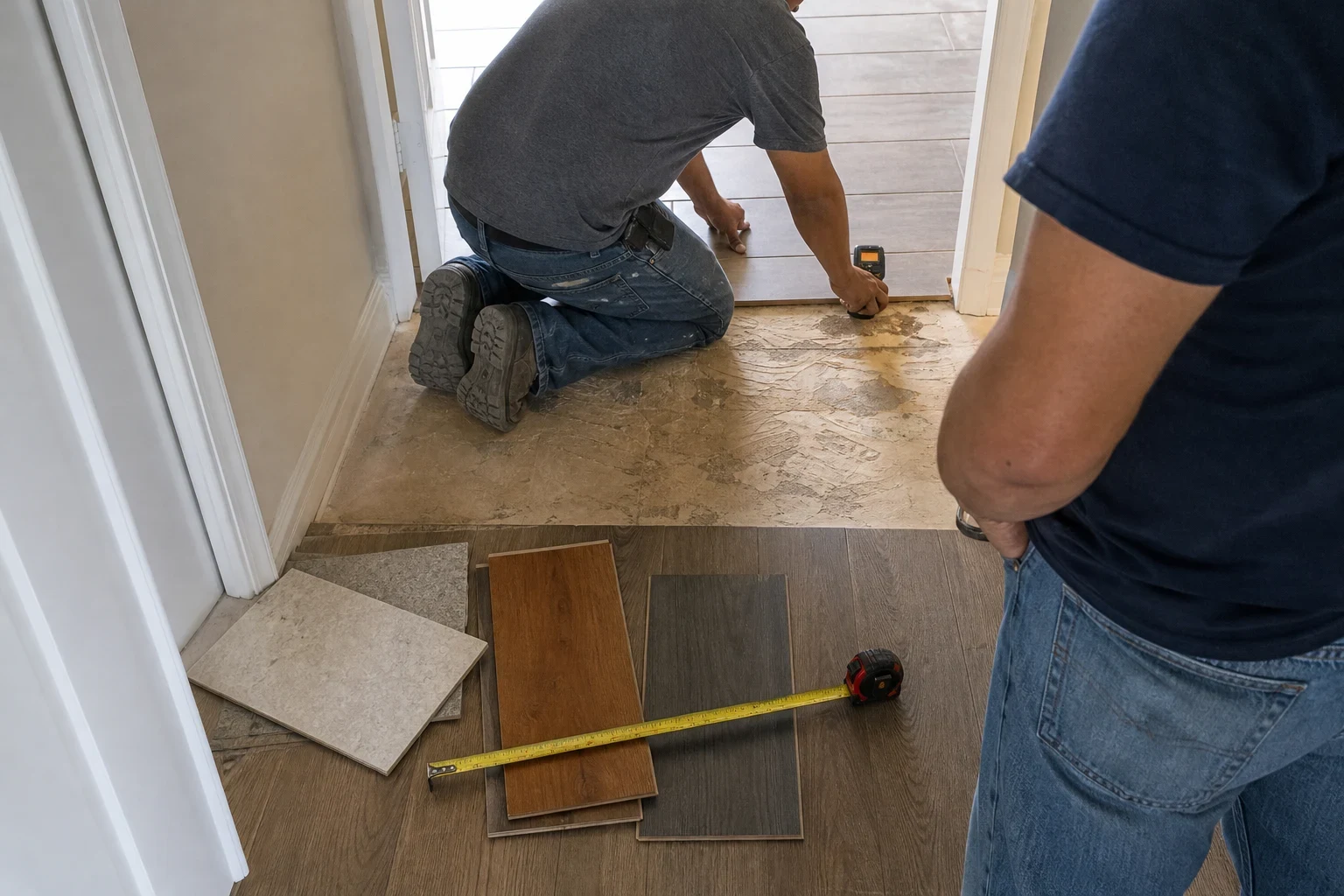
At your home we measure every room, check the slab and, if there is damage, photograph and record it before anything is disturbed. You can share those records with your insurer.
- 3
Removal and prep
We cover furniture paths and doorways, pull the old flooring and haul it away. Then we test, dry if needed and flatten the subfloor.
- 4
Installation day
Tiles go down from the planned centerline, with cuts made outside or in a protected spot to keep dust low. Most single rooms are finished in a day, and larger areas take longer.
- 5
Walkthrough and cleanup
We vacuum, wipe the surface and walk the floor with you, checking seams and trim. Every installation carries our 1-year workmanship warranty.
What moves the cost of luxury vinyl tile
Each price we give is built from your measurements and what we find under the old floor. We write it line by line, so you can see where the money goes and an adjuster can compare it with their own scope if insurance is involved.
- The product you choose
- Thicker wear layers, rigid stone-polymer cores and realistic embossed textures cost more than thin glue-down tile. We will show you where the extra spend makes a visible difference and where it does not.
- Condition of the slab
- A dry, flat slab needs little work. Moisture, cracks or old adhesive add drying time, grinding or leveling compound.
- What comes out first
- Carpet lifts quickly. Ceramic tile set in mortar takes far more labor and disposal.
- Layout and grout
- Diagonal patterns and grouted joints use more material and more hours than a straight, click-together layout.
- Rooms beyond the floor
- Stairs, many doorways and transitions to other surfaces add trim and cutting time. Stairs are priced through our Stair Flooring work.
Questions about luxury vinyl tile
- Will my insurance pay for a new LVT floor?
- That depends on your policy and the cause of the damage, and only your adjuster can decide it. What we can do is give you clear photos, moisture readings, a sample of the old floor and an itemized estimate. Good records make the adjuster's review simpler, but we never promise an outcome.
- What is the difference between LVT and LVP?
- Both share the same layered construction of backing, printed image and clear wear layer. LVT is cut into square or rectangular pieces printed with stone and ceramic patterns, while luxury vinyl plank comes in long, narrow boards made to resemble wood. Most people decide by which appearance suits the room and how the shape lines up with its walls.
- Only one room was damaged. Can you match the rest of the floor?
- We bring your old sample to suppliers and look for the same product or a close match. Vinyl lines are discontinued often, so sometimes a true match does not exist. If so, we tell you honestly and document it, because that can matter to how a claim is handled.
- Is luxury vinyl tile really waterproof?
- The tile itself does not absorb water, so spills and mopping will not harm it. Water that gets under the floor at walls or around a toilet can still sit on the slab. That is why we test moisture and seal edges in wet rooms.
- What protection do I have if something goes wrong with the installation?
- We are insured, and every installation comes with a 1-year workmanship warranty, which covers how we laid the floor. Product defects fall under the manufacturer's own warranty, and we can help you understand which applies.
- How soon can we walk on it?
- Click-lock tile can take foot traffic as soon as we finish. Glue-down and grouted tile need the curing time the adhesive and grout makers specify before heavy furniture goes back.
Start with a conversation about your floor
Tell us about the rooms and any damage you are dealing with. We will set a time to measure, look at the slab and explain your options plainly.