ServicesTile Flooring
Tile Flooring in Baytown, Set on a Base That Stays Flat
We install porcelain and ceramic tile in kitchens, baths, entries and open living areas. The base gets as much attention as the tile itself. If water damage brought you here, we document what we find so your insurance conversation starts with clear facts.
Why Porcelain and Ceramic Suit Wet, Busy Rooms
Few floors shrug off spills, heavy foot traffic and damp air the way tile does. Porcelain is dense and absorbs very little moisture. Glazed ceramic is lighter and easier to cut. Both hold their color for decades when they are set correctly.
The weak point is rarely the tile. Most cracked or hollow-sounding floors we pull up failed because the slab was out of flat, the thinset coverage was thin, or there was no room left for the floor to move. On the Gulf Coast, slabs shift with the clay soil, so we plan for movement rather than hope it never comes.
Many of our tile calls start after a supply line, water heater or storm leak. In those cases we photograph and measure the damage before anything is removed, and we explain how the claim process usually goes. We do not act as your adjuster or promise what a policy will pay.
What Comes With Our Tile Installation
- Taking out the existing floor
- Old tile, vinyl or carpet comes up, the slab gets scraped and we cart off the debris. Where the layout permits, plastic sheeting at the doorways keeps dust in the work area.
- Checking and leveling the slab
- A long straightedge shows how flat the slab is, and self-leveling compound fills the low areas. Bigger tile demands a flatter surface than small tile, and if your slab needs more than normal prep, you hear it from us before we begin.
- Membranes for cracks and water
- Over slab cracks we put down a crack isolation membrane so shifting underneath doesn't show up in the tile. Showers and wet areas get a waterproofing membrane made for that job.
- Setting, joints and grout
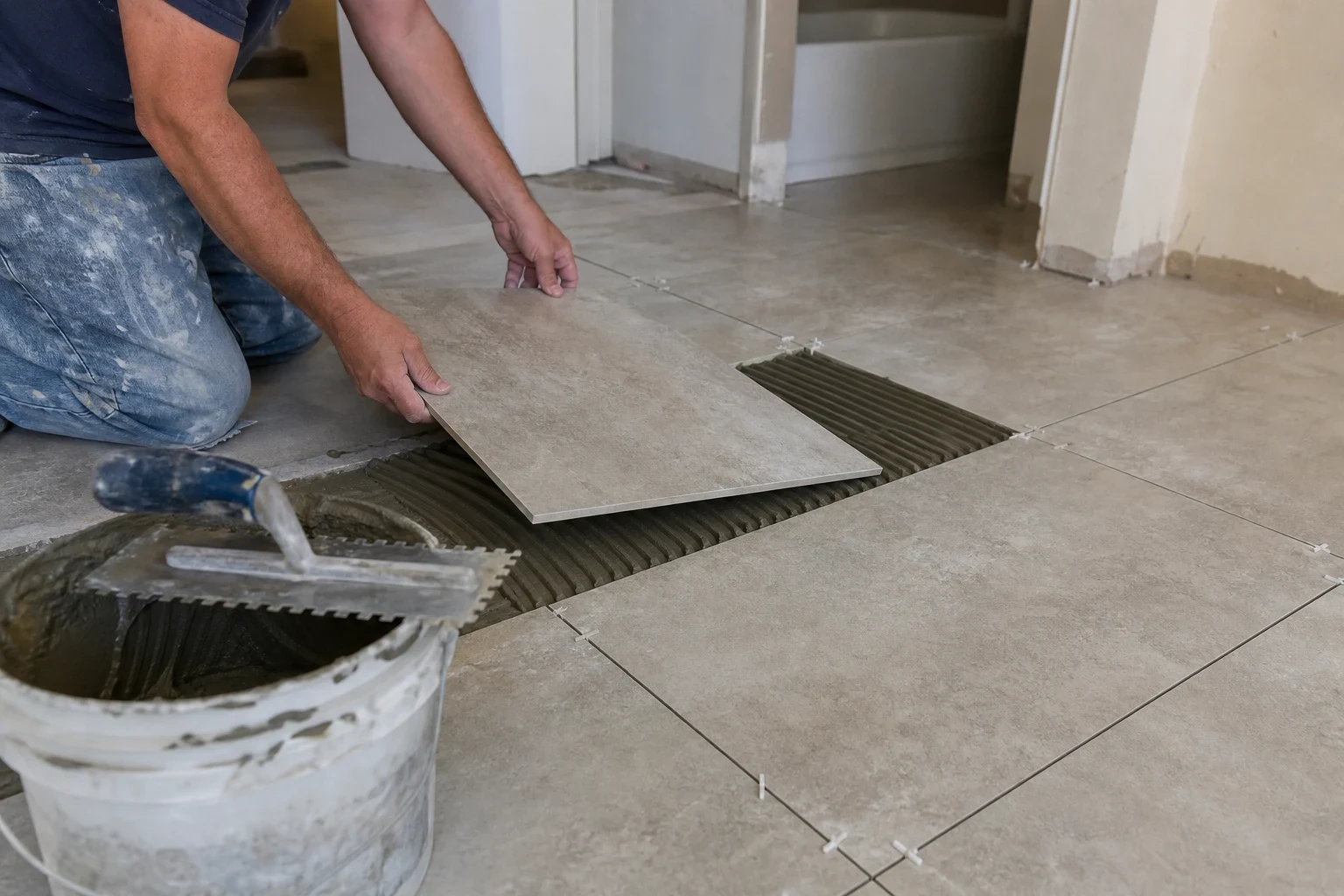
- When the tile size calls for it, we back-butter each piece for full mortar contact. Expansion gaps go at the walls and soft joints where tile meets another floor, and then we grout in your chosen color.
- Finish work and cleanup
- We finish baseboards, thresholds and transitions to neighboring floors neatly, clean off the grout haze and leave the room ready to use once the grout has cured.
Signs Your Tile Floor Needs Attention
Hollow sound underfoot
Tap a tile with a coin. A dull, hollow note usually means the tile has lost its bond with the mortar and may crack soon.
Cracks running across several tiles
A crack that crosses tile after tile in a line often follows a crack in the slab. Replacing a single tile will not hold without addressing what is underneath.
Dark or crumbling grout
Grout that stays dark after cleaning, or breaks away near a tub or toilet, can point to moisture getting in. It is worth finding the source before the subfloor or nearby walls are affected.
Water from a leak or storm
After a pipe, appliance or storm leak, tile may look fine while water sits under it. Moisture readings and photos taken early help if you plan to file a claim.
Tenting or lifting
Tiles that rise into a peak were set without room to expand. This usually shows up in sunny rooms or after a hot spell, and it needs a proper repair rather than a patch.
What Moves the Price of a Tile Floor
The tile itself is often a smaller share of the bill than the work hidden beneath it. We set a price only after seeing the room and checking the slab, and the written scope shows where each part of the cost comes from. Nothing is added later without talking to you first.
Slab condition
A flat, clean slab keeps prep short. Cracks, old adhesive or an uneven surface add leveling compound, membrane and labor.
Tile format and type
Oversized porcelain panels leave almost no tolerance for a wavy slab, and each piece often takes two people to place without chipping an edge. Standard ceramic goes down faster. Natural stone and small mosaics take longer to cut and fit.
Layout and pattern
Straight lay is the most efficient. Diagonal, herringbone and offset patterns create more cuts and more waste.
Removal and water damage
Tearing out old tile takes more time than lifting carpet or vinyl. If a leak soaked the area, drying and removing damaged materials is part of the job and part of what we document.
How a Tile Job Runs
- 1
Walkthrough and measurements
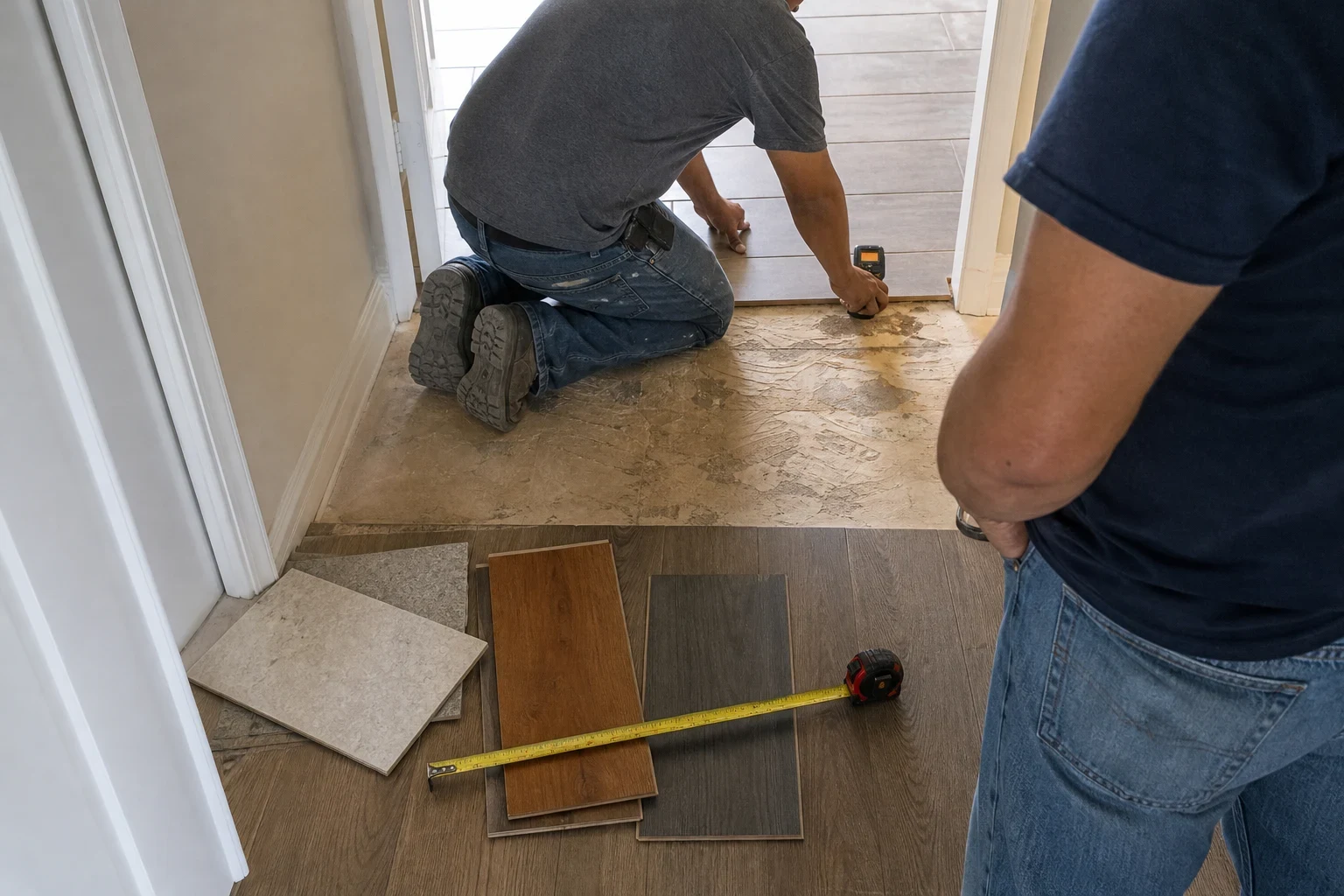
We look at the room, check the slab, and talk through tile size, layout and grout color. If there is water damage, we take dated photos, moisture readings and notes on the existing tile before anything changes.
- 2
Written scope and material order
You get a written scope that lists prep, materials and labor separately. That same breakdown is useful to share with an insurance adjuster if a claim is open.
- 3
Prep day
Old flooring comes out, the slab is cleaned, cracks are treated and low spots are leveled. Prep often takes as long as setting the tile, and it is where a lasting floor is decided.
- 4
Setting and grouting
We lay out from the room's center lines so cuts at the walls are balanced, then set and grout. Most rooms can take light foot traffic within a day or two of grouting.
- 5
Final walkthrough
We walk the floor with you, point out any care steps for the grout, and answer questions. All of our installations carry a 1-year workmanship warranty.
Tile Flooring Questions
Can you help with my insurance claim after a leak ruined my tile?
We can document the damage with photos, measurements and moisture readings, and give you a written scope that separates removal, prep and installation. That gives your adjuster clear information to review. Coverage decisions belong to your insurer, so we will not tell you what a policy will pay.
What if my old tile is discontinued and can't be matched?
This is common, since tile lines change often. Some policies consider replacing flooring in connected rooms so the floor matches, and some do not. We can note in writing that a match is not available, which you can share with your adjuster.
Porcelain or ceramic, which should I choose?
Porcelain is denser and absorbs less water, so we usually suggest it for bathrooms, laundry rooms and entries. Glazed ceramic works well in drier rooms and costs less to cut and install. Both perform well when the base is prepared properly.
Could ground movement crack my new tile?
Clay soil swells after heavy rain and shrinks in dry spells, and a concrete foundation moves a little along with it. To protect the tile, we lay crack isolation membrane over known cracks and leave movement joints at walls and across large spans. That does not make a floor indestructible, but it removes the most common causes of cracked tile.
Is tile a regular part of your work, and is your company insured?
Tile has been part of what we do through more than 25 years in business, alongside hardwood, luxury vinyl plank and the other floors on our services list. Yes, Flooring Baytown is insured. You are welcome to ask about either point when you call.
Start With a Clear Look at Your Floor
Tell us about the room, the tile you have in mind, or the damage you are dealing with. We will explain what the slab likely needs and how a claim usually unfolds.