ServicesLuxury Vinyl Plank
Luxury Vinyl Plank in Baytown
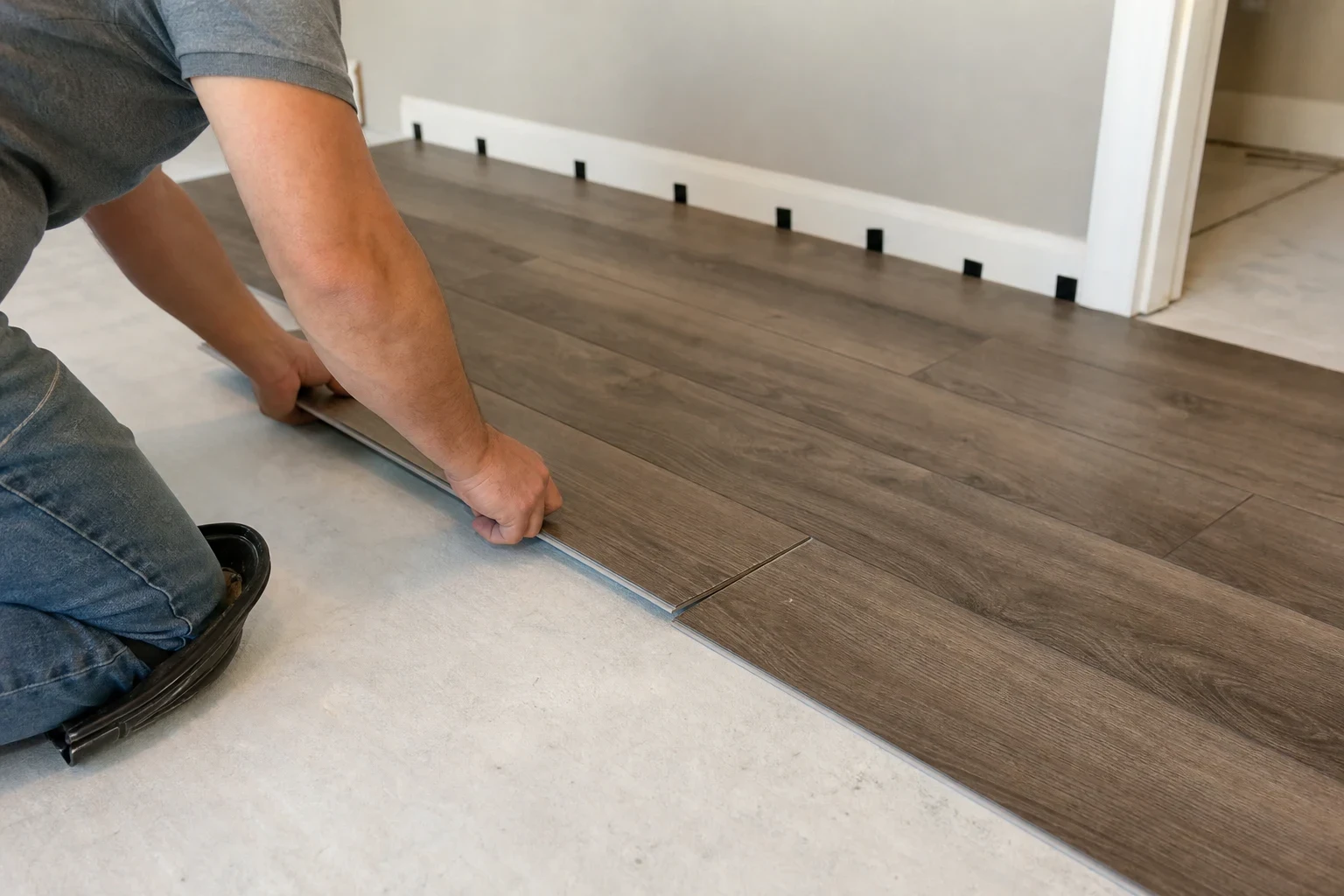
Luxury vinyl plank gives you the look of wood with a core that shrugs off spills and humidity. We test and flatten the slab first, then lay the planks with proper gaps and clean transitions. If water damage started this, we help you document it clearly.
When Vinyl Plank Is the Right Floor
Luxury vinyl plank suits kitchens, laundry rooms, baths and busy family spaces where real wood would struggle with water and wear. A rigid core, either stone-plastic or wood-plastic composite, keeps the plank stable when the air turns heavy and damp, which matters on the Gulf Coast. The printed layer can look like oak, hickory or weathered pine, and the clear wear layer on top, measured in mils, decides how well it holds up to dogs, chairs and sand from the yard.
It is a floating floor. The planks click together and rest on the subfloor rather than being glued or nailed, so the result depends on what is underneath. A slab with a dip or a hump will show it through the planks as a soft spot or a click joint that pops apart.
Many of our vinyl plank jobs follow a leak, a failed water heater or storm water. In those cases we document what we find before anything is torn out, so your adjuster has a clear record. We do not act as your adjuster, and we will not tell you what a policy covers. We give you accurate photos and a written scope you can share.
What Your Vinyl Plank Installation Includes
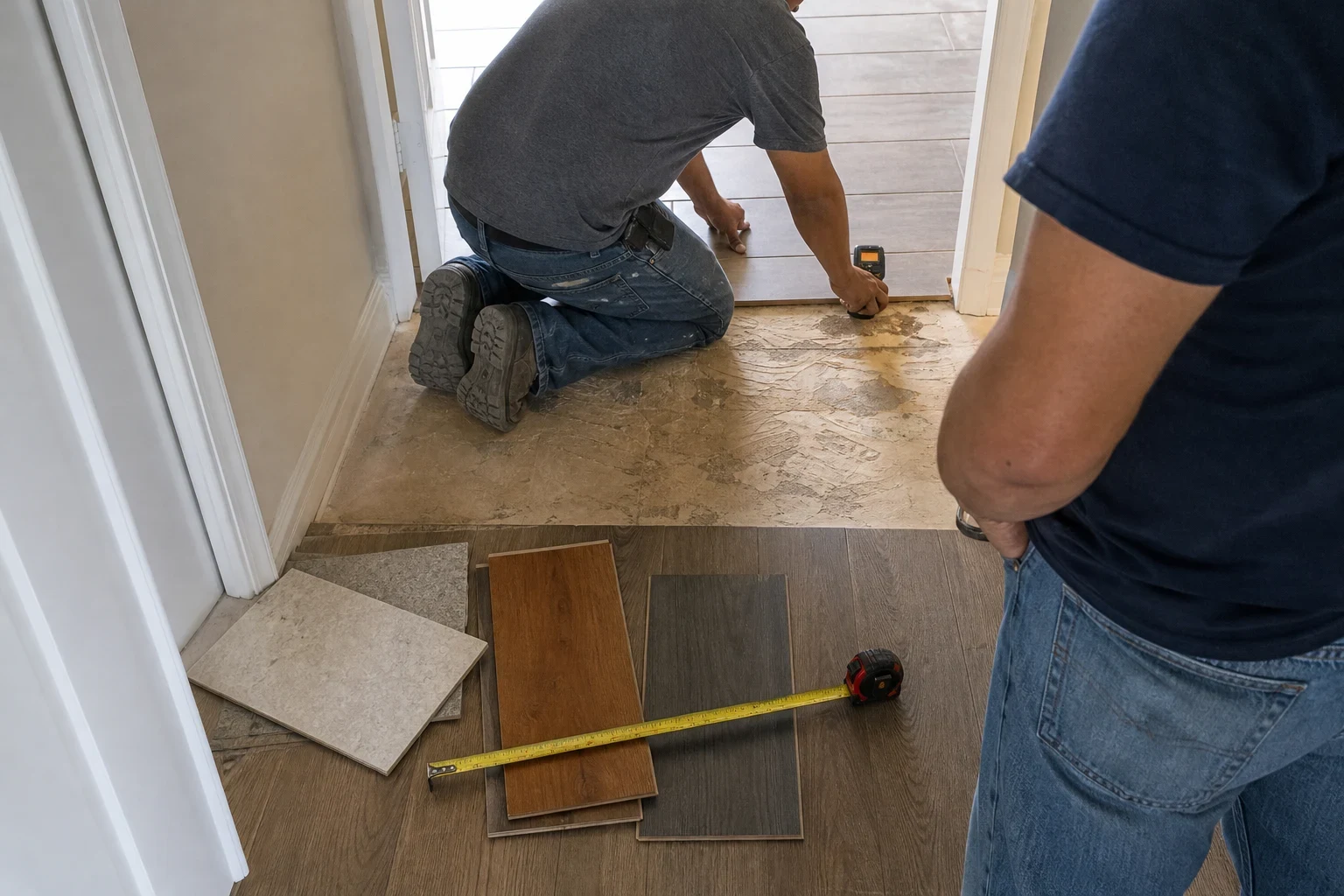
Moisture testing on the slab
We take moisture readings across the concrete before choosing an underlayment. Vinyl plank resists water from above, but moisture rising from a slab can trap under it and lead to odor and mold.
Flattening the subfloor
A long level laid across the concrete in several directions shows us where it rises and where it sags. Ridges get ground down and hollows get filled with self-leveling compound. Plank makers set a tight flatness limit over a ten-foot span, and that limit is the standard we hold the slab to.
Underlayment and vapor barrier
If the plank has no attached pad, we lay one rated for slabs. Where readings call for it, we add a vapor barrier beneath.
Removal and haul-away of the old floor
We pull up carpet, tack strip, old vinyl or laminate and take it with us. Damaged material from a water loss is photographed before it leaves your home.
Finish details at doors and walls
Door casings are trimmed at the base so the new floor tucks neatly under them. We keep an expansion gap along every wall and hide it with baseboard or quarter round. Strips where the plank meets tile or carpet sit low and snug, so nothing catches a toe.
Signs It Is Time for New Vinyl Plank
- Swelling or soft spots after a leak
- Laminate and older vinyl over a wet slab can puff at the seams or feel spongy. That usually means water reached the core or got trapped underneath.
- A musty smell near the floor
- Odor that lingers after the visible water is gone often points to moisture under the flooring. We lift a section to see what is there before recommending anything.
- Planks that separate or click when you walk
- Gaps at the ends or a hollow clicking sound often come from an uneven subfloor or a missing expansion gap. Reinstalling over the same base tends to repeat the problem.
- Worn-through wear layer
- Gray, dull paths in hallways and in front of the sink mean the protective layer is gone. Once the print shows wear, it cannot be restored.
- Old carpet you want gone for good
- Families with pets or allergies often move from carpet to plank for easier cleaning. It is one of the most common reasons we get called.
How a Vinyl Plank Job Runs
- 1
A walk-through and honest look
We visit, measure each room and check the slab. If there is water damage, we photograph it, note moisture readings and write down what we see, room by room.
- 2
A written, line-item scope
You get an estimate that separates removal, leveling, underlayment, plank, trim and any furniture moving. That same document is easy to hand your adjuster if a claim is open.
- 3
Acclimation and prep
Planks are delivered and allowed to settle to your home's temperature as the maker recommends. On install day we protect cabinets and walls, remove the old floor and prepare the slab.
- 4
Installation and cleanup
Most rooms are laid in a day or two, depending on leveling. We finish the trim, vacuum and walk the floor with you before we leave, pointing out anything you should know about care.
What Moves the Price of Vinyl Plank
The plank itself is only part of the cost. What sits under it and how much prep it needs often matters as much. We price each piece separately so you can see where the money goes.
- Plank quality and wear layer
- Thicker wear layers and rigid cores with attached pads cost more but hold up better in high-traffic rooms.
- Subfloor condition
- Concrete that is already level and dry adds very little. Low spots, cracks or wet readings call for grinding, leveling compound or a vapor barrier, and each one shows up as its own line on the estimate.
- Removal of the old floor
- Carpet comes up quickly. Glued-down vinyl, tile or wet material from a water loss takes longer and costs more to remove and dispose of.
- Room layout and trim
- Open plans go fastest. Closets, angled walls, many doorways and new baseboard add cutting and finish time.
- Matching existing floors
- If only part of the floor was damaged and the original plank is discontinued, rooms may need replacing to the nearest natural break. We note this in writing for your adjuster.
Common Questions About Vinyl Plank
- Does luxury vinyl plank hold up to water?
- A spill or damp mop won't make the planks swell. But water from a broken supply line can run through seams and edges and settle on the slab below. That's why we test moisture and choose the right barrier, and why a large leak usually still means pulling the floor up to dry things out.
- Will you help with a water damage claim?
- We'll record the damage with photos, moisture readings and a line-item scope you can pass to your adjuster. We can't say what your policy covers or negotiate for you. Many homeowners find that a clear written record makes talking with their insurance company easier.
- Can you lay vinyl plank on top of my tile?
- In many cases, yes. The tile must be well bonded and level, and we fill the grout lines with patching compound so they never show through the plank. Because the floor ends up higher, we check door clearances and transitions first. Loose or cracked tiles have to be removed.
- When can we walk on the new floor?
- Floating vinyl plank can be walked on right after installation. When leveling compound is needed, it has to cure before the planks go in, which can lengthen the schedule. We let you know about that ahead of time.
- What happens if something goes wrong after the job?
- We've been in business 25+ years and carry insurance while we work in your home. Like all our installations, your plank floor has a 1-year workmanship warranty. If an issue comes from how we installed it, like a joint separating or a threshold strip coming loose, we come back and make it right.
Ready to Look at Your Floor Together
Tell us about the rooms and anything that happened to the old floor. We will set a time to measure, check the slab and talk through plank options.