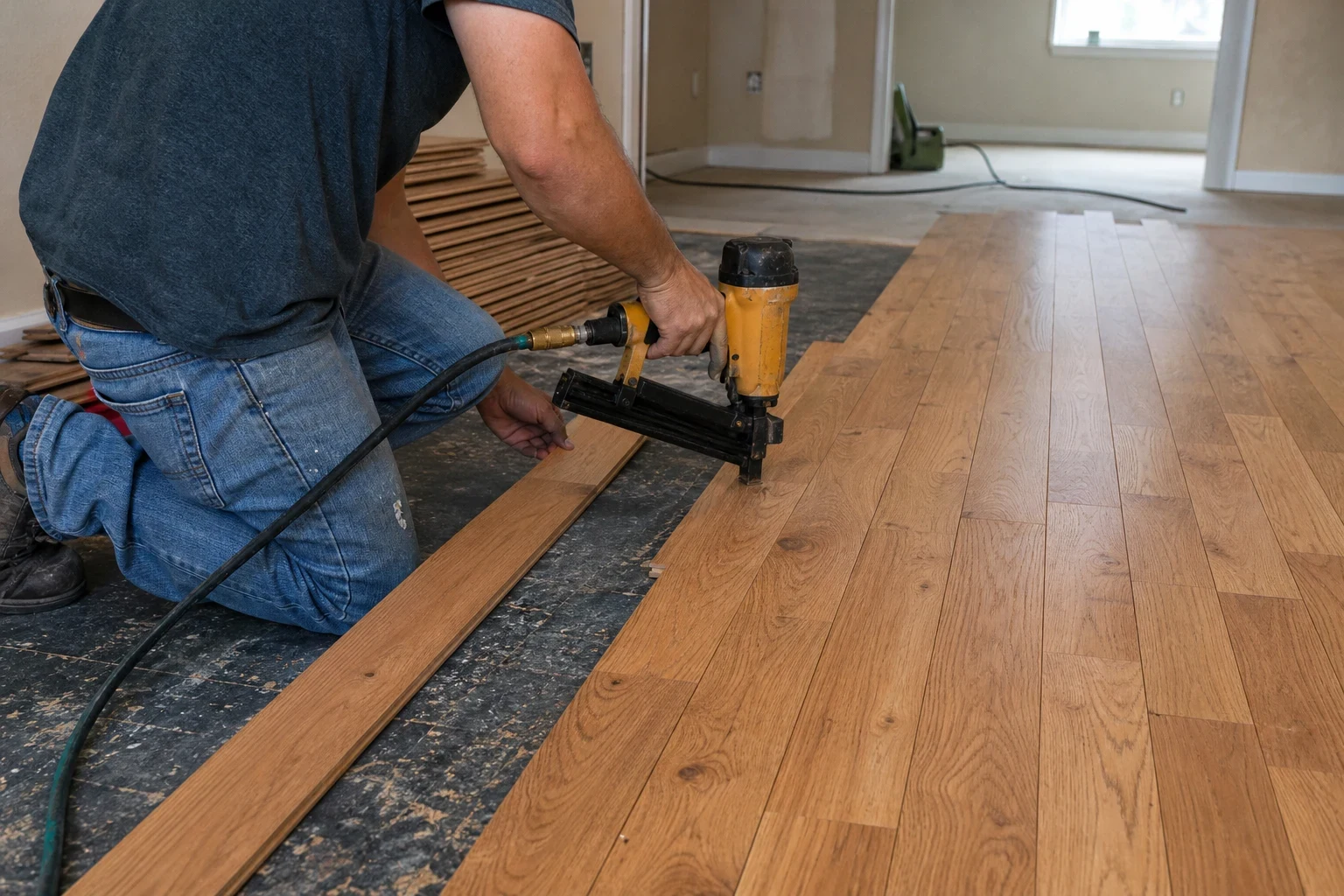
ServicesHardwood Flooring
Hardwood Flooring in Baytown, Laid With Every Step on Record
We install solid and engineered hardwood with the patience the material asks for. If water damage is the reason you are replacing a floor, we document what we find, write a clear scope for your adjuster and explain the claim process plainly.
When hardwood is the right floor
Hardwood is a living material. It takes on moisture, gives it back and rewards a careful install with decades of warmth underfoot. We help you choose between solid and engineered boards based on what sits underneath. Most homes around Baytown are built on concrete slabs, where engineered planks glued down or floated over a vapor barrier stay flat, while solid boards want a plywood subfloor to nail into.
Many of our hardwood jobs start after a failed supply line, a dishwasher leak or storm water. If insurance may cover the replacement, we photograph the damage, take moisture readings and write a line-item scope you can share with your adjuster. We will tell you how claims usually move, but the adjuster decides what your policy covers, and we will not promise otherwise.
We have been in business 25+ years. That time has taught us to slow down at the subfloor, because that is where most hardwood problems begin.
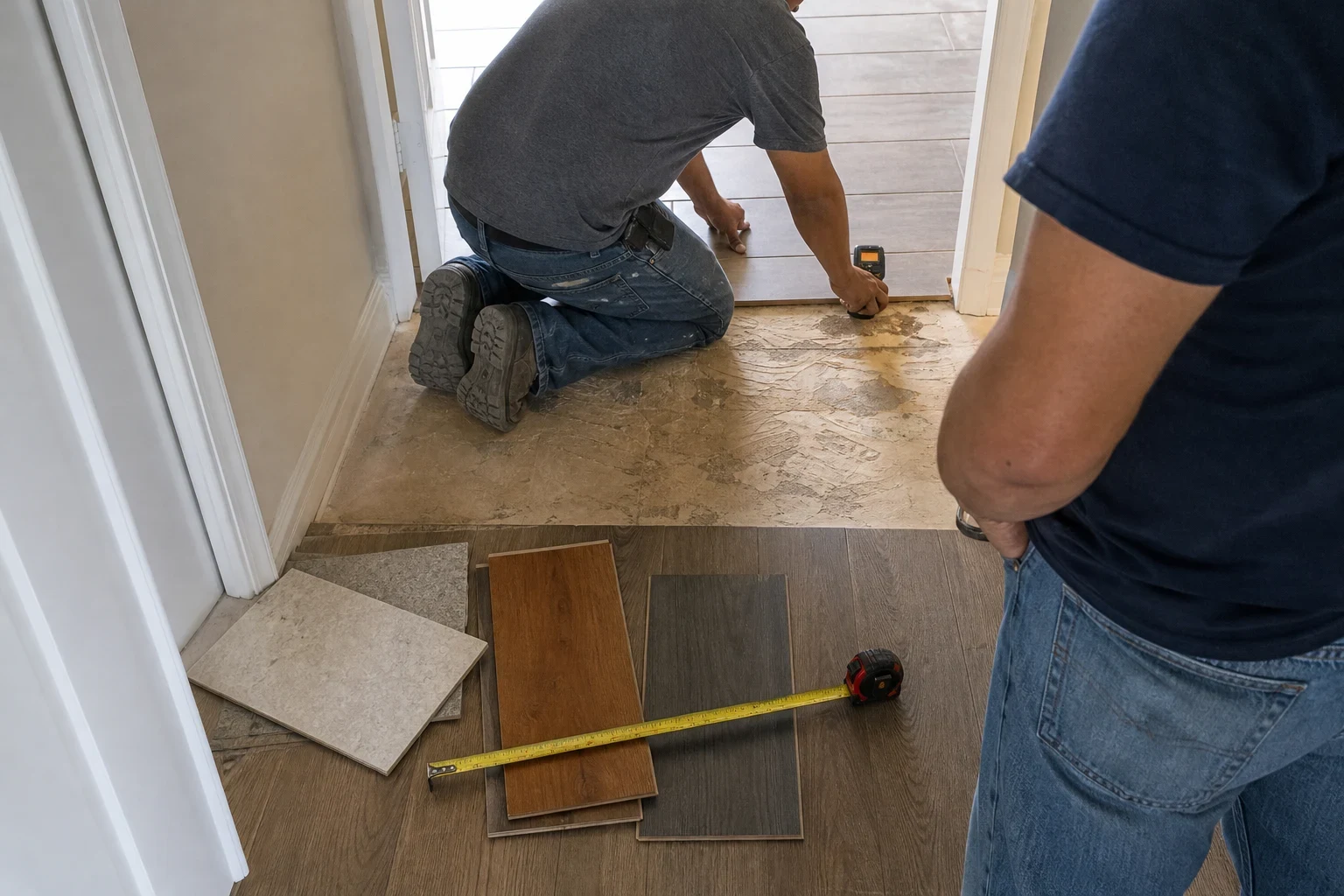
What our hardwood installation includes
- 01
Moisture testing before ordering
We read the slab or subfloor and the boards themselves, then write the numbers down. Wood laid over a damp base will cup, and no finish can hide that later.
- 02
Solid or engineered, matched to your house
We walk you through species, plank width and wear layer, and how each behaves in a humid climate. Wider planks look calm and generous but move more, so we factor that into the choice.
- 03
Careful tear-out and photos
When old flooring comes up, we photograph what is underneath: wet padding, stained plywood, rusted tack strip or mold on the slab. Those images often matter more to a claim than anything said on the phone.
- 04
Flattening and vapor protection
High spots are ground down and low spots filled so boards sit tight. On concrete we lay the right barrier or moisture-blocking adhesive for the product.
- 05
Acclimation, layout and transitions
Boards come into your home ahead of install to settle. We plan the layout so seams stagger naturally, then fit trim, thresholds and reducers. If the hardwood continues up a staircase, our Stair Flooring page covers that work.
Questions about Hardwood Flooring?
Call(346) 594-6597Signs your hardwood needs replacing
Cupped or crowned boards
When board edges lift higher than the middle, or the middle bulges above the edges, water has worked its way into the wood or the base beneath it. Boards bent out of shape like this seldom flatten again on their own.
Dark staining along seams
Gray or black lines at the joints usually point to water that sat for a while. It is worth photographing before anything is moved.
Soft or hollow spots
A floor that gives underfoot or sounds hollow can mean failed adhesive or a weakened subfloor beneath.
A musty smell after a leak
Even when the surface looks fine, trapped moisture under the boards can feed mold. A moisture reading tells you quickly.
Gaps that never close
Seasonal gaps come and go. Wide gaps that stay open year round suggest the boards dried out badly or were laid without proper acclimation.
How a hardwood job runs
- 1
A conversation by phone
You tell us what happened and what you hope the room will feel like. If there is a claim open, let us know the details so we can document what your adjuster will want to see.
- 2
In-home inspection
We measure, take moisture readings and photograph damage and the subfloor. You get copies of the photos and the readings.
- 3
A written, line-item scope
Tear-out, subfloor work, materials, installation and trim each get their own line. You can compare it with an adjuster's estimate line by line and ask us about any difference.
- 4
Installation day
We are insured, and we protect cabinets, doorways and adjacent floors before work begins. Dust is contained, debris leaves with us and rooms are swept clean each evening.
- 5
Looking it over together
Before we leave, you and we go room by room, testing thresholds and reducers underfoot. We also talk through care for the first few weeks, while the finish and any adhesive finish curing.
What moves the cost of hardwood flooring
Hardwood pricing depends more on what is underneath and how the rooms connect than on the board alone. We price after we have seen the space and tested the subfloor, so the scope reflects your home rather than a guess.
- Subfloor condition
- A dry, flat slab needs little preparation. Water-stained plywood, uneven concrete or high moisture readings add grinding, patching or replacement.
- The board you choose
- Engineered and solid boards are priced differently, and the wood species, how wide the planks run and how thick the top layer of real wood is all shift the material line. Long, wide planks in a dense species cost the most.
- Layout and square footage
- Open rooms go quickly. Hallways, closets, angled walls and many doorways take more cuts and more time.
- Removal and disposal
- Pulling up glued-down wood or old tile takes more labor than lifting carpet and pad.
- Stairs and transitions
- Stair treads, nosing and thresholds into tile or carpet are priced as their own items in the scope.
Hardwood flooring questions
Will my insurance pay for new hardwood after a leak?
It depends on your policy and the cause of the water, and only your adjuster can decide coverage. Sudden events like a burst pipe are often treated differently from slow, long-term leaks. What we can do is document the damage clearly and give you a scope the adjuster can review.
Can you match the hardwood in rooms that were not damaged?
Sometimes. We bring samples and compare species, width and color, but an exact match is not always possible, especially with older or discontinued boards. If a match cannot be found, we photograph the comparison so you can discuss continuous flooring with your adjuster.
Can hardwood go directly over a concrete slab?
Engineered hardwood can, either glued down or floated over a proper barrier. Solid hardwood generally needs a plywood subfloor installed over the slab first. We test slab moisture before recommending either.
How soon can we walk on the floor and move furniture back?
Floated floors can usually be walked on right away. Glue-down installs need the adhesive to cure, and we will give you a specific time for your product. Use felt pads and lift furniture rather than sliding it.
Is the installation covered by a warranty?
Yes. Our labor is backed by a 1-year workmanship warranty on all installations, and hardwood is no exception. The boards carry whatever protection their maker offers, which varies from one product to the next, so we will point that out when you choose.
Get clear answers before you choose a floor
Starting fresh or sorting out a water claim, one conversation with us will help you understand your options, your subfloor and what to document next.